Healing Beyond Words: The Power of Art Therapy
Traditional talk therapy can sometimes fall short when emotions are too complex for words. Art therapy bridges this gap by using creative expression to access, process, and heal deep-seated psychological wounds.
What is Art Therapy?
Art therapy is a mental health profession that combines psychological theory with creative practice. Guided by a credentialed art therapist, individuals use materials like paint, clay, and markers to explore their inner thoughts. You do not need any artistic talent or skill to benefit from this practice; the focus remains entirely on the process of creation rather than the final product.
Key Psychological Benefits
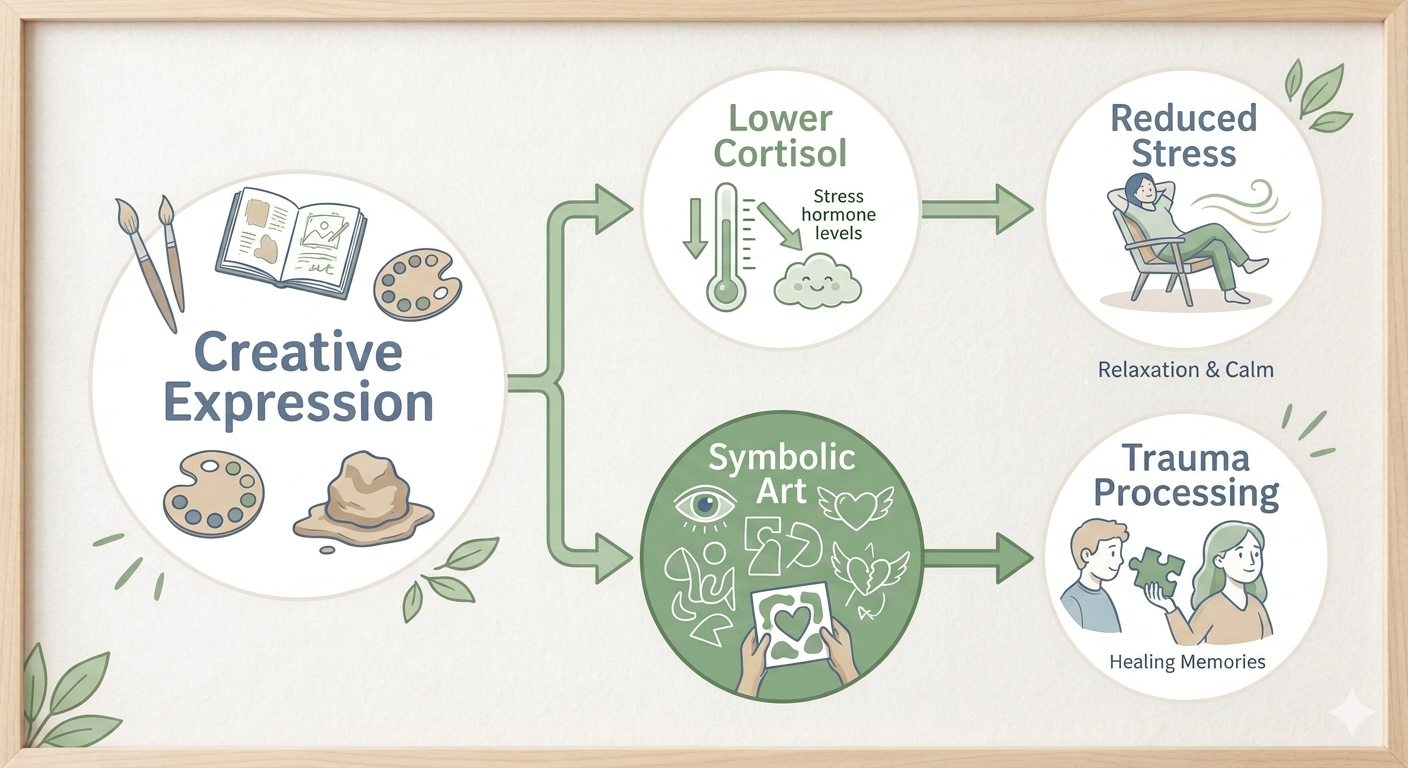
- Reduces Stress and Anxiety: Creating art lowers cortisol levels and activates the parasympathetic nervous system to induce deep relaxation.
- Processes Complex Trauma: The brain stores traumatic memories visually. Art therapy accesses non-verbal regions of the brain to safely externalize painful experiences.
- Improves Emotional Regulation: Translating raw emotions into tangible, visual forms helps individuals gain distance, perspective, and control over their feelings.
- Boosts Self-Esteem: Completing a piece of art provides a powerful sense of autonomy, mastery, and personal accomplishment.
- Enhances Self-Discovery: The subconscious mind often reveals hidden insights through symbols, colors, and metaphors chosen during the creative process.
Common Techniques and Practices
- Free-Association Drawing: Sketching without a planned design to unlock immediate subconscious thoughts and moods.
- Clay Sculpting: Using tactile materials to physically vent anger, grief, or physical tension.
- The Guided Mandala: Drawing within a circular frame to establish a sense of safety, centering, and emotional containment.
- Collage Making: Cutting and pasting existing images to reconstruct identity or visualize future personal goals.
Ready to Start Art Therapy?
Kelly Ledford offers Art Therapy in our Marietta Office.
-
Is Codependency a Response to Trauma?
Rooted in the Past: Is Codependency a Response to Trauma? When people discover they are stuck in codependent relationship patterns, their initial reaction is often self-blame. They wonder why they tolerate poor treatment, why they cannot say no, or why they feel compelled to rescue people who do not want to be saved. However, modern…
-
Understanding Codependency
Understanding Codependency: Signs, Impact, and How to Break the Cycle Relationships should be a source of support, growth, and mutual respect. However, when a relationship becomes severely unbalanced, it can slip into codependency. This article explores what codependency means, how to recognize the signs, how it impacts different types of relationships, and actionable steps to…
-
What Is Narcissistic Abuse?
Narcissistic abuse is a form of psychological and emotional exploitation used by individuals with narcissistic traits or Narcissistic Personality Disorder (NPD). It is characterized by a lack of empathy and a deep need for control and admiration. The Cycle of Narcissistic Abuse This type of abuse often follows a repetitive, predictable pattern that keeps victims…
-
Understanding Autism in Adults
Navigating the world while feeling fundamentally different from those around you can be deeply isolating. For many undiagnosed adults, discovering they might be autistic is not a labels-based restriction, but a powerful key to self-understanding. It answers a lifetime of wondering why certain daily tasks feel so heavy. Here is a gentle guide to understanding…
-
Bipolar Disorder
What is Bipolar Disorder? Understanding Bipolar Disorder: Symptoms, Types, and Management Bipolar disorder is a chronic mental health condition characterized by severe shifts in mood, energy, activity levels, and daily functioning. Unlike typical daily mood changes, these shifts involve intense emotional states called mood episodes, which can range from emotional highs (mania or hypomania) to deep…
-
Art Therapy
Healing Beyond Words: The Power of Art Therapy Traditional talk therapy can sometimes fall short when emotions are too complex for words. Art therapy bridges this gap by using creative expression to access, process, and heal deep-seated psychological wounds. What is Art Therapy? Art therapy is a mental health profession that combines psychological theory with…